The Guardian Thousands of Cattle Reared for Supermarket Beef
Intensive beast farming or industrial livestock production, also known by its opponents equally manufactory farming [ane] and macro-farms,[2] is a type of intensive agriculture, specifically an approach to animal husbandry designed to maximize product, while minimizing costs.[iii] To achieve this, agribusinesses go on livestock such every bit cattle, poultry, and fish at high stocking densities, at large scale, and using modern machinery, biotechnology, and global trade.[4] [v] [half-dozen] [7] [eight] The main products of this industry are meat, milk and eggs for human consumption.[nine] There are issues regarding whether intensive animal farming is sustainable[10] or ethical.[eleven]
There is a continuing debate over the benefits, risks and ethics of intensive animal farming. The issues include the efficiency of food production; animate being welfare; health risks and the environmental impact (e.g. agronomical pollution and climate change).[12] [13] [14]
History [edit]
Intensive animal farming is a relatively recent development in the history of agriculture, and the outcome of scientific discoveries and technological advances. Innovations from the late 19th century generally parallel developments in mass production in other industries in the latter office of the Industrial Revolution. The discovery of vitamins and their part in animal diet, in the first 2 decades of the 20th century, led to vitamin supplements, which allowed chickens to be raised indoors.[15] The discovery of antibiotics and vaccines facilitated raising livestock in larger numbers by reducing disease. Chemicals developed for employ in World State of war II gave rise to synthetic pesticides. Developments in aircraft networks and engineering take fabricated long-distance distribution of agronomical produce viable.
Agricultural output across the world doubled four times between 1820 and 1975 (1820 to 1920; 1920 to 1950; 1950 to 1965; and 1965 to 1975) to feed a global population of one billion human beings in 1800 and vi.five billion in 2002.[16] : 29 During the same catamenia, the number of people involved in farming dropped as the process became more automated. In the 1930s, 24 percent of the American population worked in agriculture compared to 1.5 pct in 2002; in 1940, each farm worker supplied eleven consumers, whereas in 2002, each worker supplied xc consumers.[16] : 29
The era of factory farming in Britain began in 1947 when a new Agriculture Deed granted subsidies to farmers to encourage greater output by introducing new technology, in social club to reduce Great britain's reliance on imported meat. The United Nations writes that "intensification of animal production was seen as a style of providing nutrient security."[17] In 1966, the Us, United Kingdom and other industrialized nations, commenced mill farming of beef and dairy cattle and domestic pigs.[xviii] From its American and Westward European heartland, intensive animal farming became globalized in the later years of the 20th century and is still expanding and replacing traditional practices of stock rearing in an increasing number of countries.[18] In 1990 intensive animal farming deemed for 30% of earth meat product and by 2005 this had risen to forty%.[18]
Types [edit]
Intensive farms agree large numbers of animals, typically cows, pigs, turkeys, geese,[19] or chickens, often indoors, typically at high densities. The aim is to produce large quantities of meat, eggs, or milk at the lowest possible cost. Nutrient is supplied in place. Methods employed to maintain wellness and improve production may include the use of disinfectants, antimicrobial agents, anthelmintics, hormones and vaccines; poly peptide, mineral and vitamin supplements; frequent health inspections; biosecurity; and climate-controlled facilities. Physical restraints, due east.one thousand. fences or creeps, are used to command move or actions regarded as undesirable. Convenance programs are used to produce animals more suited to the confined conditions and able to provide a consistent food product.[20]
Intensive product of livestock and poultry is widespread in adult nations. For 2002–2003, FAO estimates of industrial product as a percentage of global production were 7 per centum for beef and veal, 0.viii percent for sheep and goat meat, 42 percent for pork, and 67 percent for poultry meat. Industrial product was estimated to account for 39 percentage of the sum of global production of these meats and 50 percent of full egg product.[21] In the United states, according to its National Pork Producers Council, 80 million of its 95 million pigs slaughtered each yr are reared in industrial settings.[16] : 29
Chickens [edit]
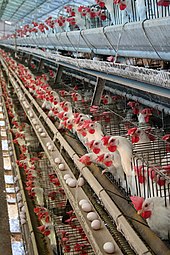
The major milestone in 20th-century poultry production was the discovery of vitamin D,[22] which fabricated it possible to keep chickens in confinement twelvemonth-round. Before this, chickens did not thrive during the winter (due to lack of sunlight), and egg production, incubation, and meat production in the off-flavour were all very difficult, making poultry a seasonal and expensive suggestion. Year-round production lowered costs, especially for broilers.[23]
At the same time, egg product was increased by scientific breeding. Afterward a few fake starts, (such as the Maine Experiment Station'southward failure at improving egg product) success was shown by Professor Dryden at the Oregon Experiment Station.[24]
Improvements in production and quality were accompanied by lower labor requirements. In the 1930s through the early on 1950s, 1,500 hens provided a total-time task for a farm family in America. In the late 1950s, egg prices had fallen then dramatically that farmers typically tripled the number of hens they kept, putting three hens into what had been a single-bird muzzle or converting their floor-solitude houses from a single deck of roosts to triple-decker roosts. Non long afterwards this, prices fell notwithstanding further and large numbers of egg farmers left the business. This fall in profitability was accompanied by a general fall in prices to the consumer, assuasive poultry and eggs to lose their status equally luxury foods.
Robert Plamondon[25] reports that the last family craven farm in his function of Oregon, Rex Farms, had thirty,000 layers and survived into the 1990s. Nevertheless, the standard laying firm of the current operators is around 125,000 hens.
The vertical integration of the egg and poultry industries was a late evolution, occurring subsequently all the major technological changes had been in place for years (including the development of modern broiler rearing techniques, the adoption of the Cornish Cross broiler, the employ of laying cages, etc.).
By the late 1950s, poultry production had inverse dramatically. Big farms and packing plants could grow birds by the tens of thousands. Chickens could be sent to slaughterhouses for butchering and processing into prepackaged commercial products to be frozen or shipped fresh to markets or wholesalers. Meat-blazon chickens currently abound to market weight in half dozen to seven weeks, whereas only 50 years ago information technology took three times as long.[26] This is due to genetic selection and nutritional modifications (just non the utilize of growth hormones, which are illegal for use in poultry in the US[27] and many other countries, and have no effect). In one case a meat consumed just occasionally, the mutual availability and lower price has made chicken a common meat product inside developed nations. Growing concerns over the cholesterol content of red meat in the 1980s and 1990s further resulted in increased consumption of chicken.
Today, eggs are produced on large egg ranches on which environmental parameters are well controlled. Chickens are exposed to bogus light cycles to stimulate egg production yr-round. In add-on, forced molting is commonly practiced in the Us, in which manipulation of light and nutrient access triggers molting, in order to increase egg size and production. Forced molting is controversial, and is prohibited in the European union.[28]
On boilerplate, a chicken lays one egg a twenty-four hour period, but not on every day of the year. This varies with the brood and time of year. In 1900, average egg production was 83 eggs per hen per year. In 2000, it was well over 300. In the United States, laying hens are butchered after their second egg laying season. In Europe, they are generally butchered after a single season. The laying period begins when the hen is well-nigh 18–20 weeks onetime (depending on breed and season). Males of the egg-type breeds take little commercial value at any age, and all those not used for breeding (roughly fifty percentage of all egg-type chickens) are killed presently later hatching. The old hens likewise have petty commercial value. Thus, the main sources of poultry meat 100 years ago (leap chickens and stewing hens) have both been entirely supplanted past meat-blazon broiler chickens.
Pigs [edit]

Intensive piggeries (or hog lots) are a blazon of what in America is called a Concentrated Brute Feeding Performance (CAFO), specialized for the raising of domestic pigs upward to slaughter weight. In this arrangement, grower pigs are housed indoors in grouping-housing or harbinger-lined sheds, whilst pregnant sows are bars in sow stalls (gestation crates) and give nascency in farrowing crates.
The employ of sow stalls has resulted in lower product costs and concomitant beast welfare concerns. Many of the earth's largest producers of pigs (such as U.S. and Canada) use sow stalls, but some nations (such as the UK) and U.South. states (such every bit Florida and Arizona) have banned them.
Intensive piggeries are generally large warehouse-like buildings. Indoor grunter systems permit the grunter's condition to exist monitored, ensuring minimum fatalities and increased productivity. Buildings are ventilated and their temperature regulated. Most domestic grunter varieties are susceptible to rut stress, and all pigs lack sweat glands and cannot cool themselves. Pigs take a limited tolerance to loftier temperatures and heat stress tin lead to death. Maintaining a more specific temperature inside the sus scrofa-tolerance range also maximizes growth and growth to feed ratio. In an intensive functioning pigs will lack access to a wallow (mud), which is their natural cooling mechanism. Intensive piggeries control temperature through ventilation or drip water systems (dropping water to cool the organization).
Pigs are naturally omnivorous and are generally fed a combination of grains and poly peptide sources (soybeans, or meat and bone meal). Larger intensive pig farms may be surrounded by farmland where feed-grain crops are grown. Alternatively, piggeries are reliant on the grains industry. Grunter feed may be bought packaged or mixed on-site. The intensive piggery system, where pigs are bars in individual stalls, allows each pig to be allotted a portion of feed. The private feeding arrangement also facilitates private medication of pigs through feed. This has more significance to intensive farming methods, as the close proximity to other animals enables diseases to spread more rapidly. To forbid disease spreading and encourage growth, drug programs such as antibiotics, vitamins, hormones and other supplements are preemptively administered.
Indoor systems, especially stalls and pens (i.e. 'dry out,' not straw-lined systems) permit for the easy drove of waste product. In an indoor intensive grunter subcontract, manure tin can exist managed through a lagoon organisation or other waste-management system. However, scent remains a problem which is hard to manage.
The fashion animals are housed in intensive systems varies. Convenance sows spend the bulk of their time in sow stalls during pregnancy or farrowing crates, with their litters, until marketplace.
Piglets oftentimes receive range of treatments including castration, tail docking to reduce tail biting, teeth clipped (to reduce injuring their mother's nipples, gum disease and prevent later tusk growth) and their ears notched to assist identification. Treatments are commonly fabricated without hurting killers. Weak runts may be slain soon after nascency.
Piglets as well may be weaned and removed from the sows at between two and 5 weeks erstwhile[29] and placed in sheds. However, grower pigs – which comprise the bulk of the herd – are usually housed in alternative indoor housing, such every bit batch pens. During pregnancy, the utilise of a stall may exist preferred as it facilitates feed-management and growth control. It as well prevents pig aggression (e.one thousand. tail biting, ear biting, vulva biting, nutrient stealing). Group pens mostly require college stockmanship skills. Such pens will normally not contain straw or other material. Alternatively, a straw-lined shed may house a larger group (i.e. not batched) in age groups.
Cattle [edit]
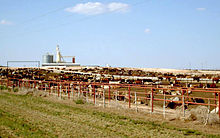
Cattle are domesticated ungulates, a member of the family unit Bovidae, in the subfamily Bovinae, and descended from the aurochs (Bos primigenius).[30] They are raised as livestock for their flesh (called beefiness and veal), dairy products (milk), leather and equally draught animals. As of 2009–2010 it is estimated that there are ane.3–1.4 billion caput of cattle in the world.[31] [32]
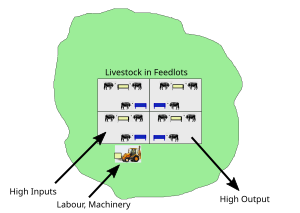
Diagram of feedlot system. This tin be contrasted with more traditional grazing systems.
The nearly mutual interactions with cattle involve daily feeding, cleaning and milking. Many routine husbandry practices involve ear tagging, dehorning, loading, medical operations, vaccinations and hoof intendance, too as grooming and sorting for agricultural shows and sales.[33]
Once cattle obtain an entry-level weight, about 650 pounds (290 kg), they are transferred from the range to a feedlot to be fed a specialized animal feed which consists of corn byproducts (derived from ethanol production), barley, and other grains as well as alfalfa and cottonseed meal. The feed also contains premixes composed of microingredients such as vitamins, minerals, chemic preservatives, antibiotics, fermentation products, and other essential ingredients that are purchased from premix companies, usually in sacked course, for blending into commercial rations. Because of the availability of these products, a farmer using their own grain can codify their own rations and be assured the animals are getting the recommended levels of minerals and vitamins.
At that place are many potential impacts on homo health due to the modern cattle industrial agriculture organization. There are concerns surrounding the antibiotics and growth hormones used, increased E. coli contamination, higher saturated fatty contents in the meat because of the feed, and also environmental concerns.[34]
As of 2010, in the U.S. 766,350 producers participate in raising beefiness. The beef manufacture is segmented with the majority of the producers participating in raising beef calves. Beefiness calves are generally raised in minor herds, with over 90% of the herds having less than 100 caput of cattle. Fewer producers participate in the finishing stage which often occurs in a feedlot, but all the same in that location are 82,170 feedlots in the U.s.a..[35]
Aquaculture [edit]
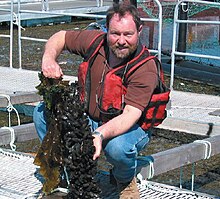
Integrated multi-trophic aquaculture (IMTA), besides called integrated aquaculture,[36] is a exercise in which the by-products (wastes) from one species are recycled to go inputs (fertilizers, food) for some other, making aquaculture intensive. Fed aquaculture (e.g. fish and shrimp) is combined with inorganic extractive (e.g. seaweed) and organic extractive (eastward.grand. shellfish) aquaculture to create counterbalanced systems for environmental sustainability (biomitigation), economical stability (product diversification and risk reduction) and social acceptability (meliorate management practices).[37]
The system is multi-trophic as it makes use of species from different trophic or nutritional level, dissimilar traditional aquaculture.[38]
Ideally, the biological and chemical processes in such a system should balance. This is achieved through the appropriate selection and proportions of different species providing different ecosystem functions. The co-cultured species should not but be biofilters, just harvestable crops of commercial value.[38] A working IMTA system should outcome in greater production for the overall arrangement, based on mutual benefits to the co-cultured species and improved ecosystem health, even if the individual production of some of the species is lower compared to what could exist reached in monoculture practices over a brusk-term menstruum.[36]
Regulation [edit]
In various jurisdictions, intensive beast production of some kinds is subject to regulation for environmental protection. In the The states, a Concentrated Animal Feeding Operation (CAFO) that discharges or proposes to belch waste requires a permit and implementation of a plan for management of manure nutrients, contaminants, wastewater, etc., every bit applicable, to meet requirements pursuant to the federal Clean Water Act.[39] [40] Some data on regulatory compliance and enforcement are bachelor. In 2000, the US Environmental Protection Agency published 5-year and 1-year data on environmental functioning of 32 industries, with data for the livestock industry being derived generally from inspections of CAFOs. The information pertain to inspections and enforcement mostly under the Clean Water Human activity, only also under the Clean Air Human action and Resource Conservation and Recovery Deed. Of the 32 industries, livestock production was among the top 7 for environmental functioning over the five-year period, and was one of the elevation ii in the final year of that menses, where good environmental functioning is indicated by a depression ratio of enforcement orders to inspections. The five-year and last-year ratios of enforcement/inspections for the livestock industry were 0.05 and 0.01, respectively. Also in the final year, the livestock industry was one of the two leaders among the 32 industries in terms of having the lowest percentage of facilities with violations.[41] In Canada, intensive livestock operations are subject to provincial regulation, with definitions of regulated entities varying among provinces. Examples include Intensive Livestock Operations (Saskatchewan), Confined Feeding Operations (Alberta), Feedlots (British Columbia), High-density Permanent Outdoor Confinement Areas (Ontario) and Feedlots or Parcs d'Engraissement (Manitoba). In Canada, intensive animate being production, similar other agricultural sectors, is too subject field to various other federal and provincial requirements.
In the Usa, farmed animals are excluded by half of all land brute cruelty laws including the federal Fauna Welfare Act. The 28-hour law, enacted in 1873 and amended in 1994 states that when animals are being transported for slaughter, the vehicle must stop every 28 hours and the animals must be let out for exercise, food, and water. The United states of america Department of Agriculture claims that the law does non employ to birds. The Humane Slaughter Act is similarly limited. Originally passed in 1958, the Act requires that livestock be stunned into unconsciousness prior to slaughter. This Act also excludes birds, who brand upwards more than 90 percent of the animals slaughtered for food, besides as rabbits and fish. Individual states all have their own fauna cruelty statutes; however many states have right-to-farm laws that serve as a provision to exempt standard agricultural practices.[42] [43]
In the Usa there is an attempt to regulate farms in the virtually realistic way possible. The easiest style to effectively regulate the about animals with a limited number of resources and time is to regulate the large farms. In New York State many Animal Feeding Operations are not considered CAFOs since they either accept less than 300 cows. These farms are not regulated to the level that CAFOs are. This can lead to pollution and nutrient leaching. The EPA website illustrates the scale of this problem past saying in New York State's Bay watershed at that place are 247 creature feeding operations and only 68[44] of them are State Pollutant Discharge Elimination System (SPDES)[45] permitted CAFOs. This is the issue nosotros need to deal with as the regulations on the non-CAFO farms are much less strict if there are any.
In Ohio animal welfare organizations reached a negotiated settlement with subcontract organizations while in California, Suggestion ii, Standards for Confining Farm Animals, an initiated law was approved by voters in 2008.[46] Regulations have been enacted in other states and plans are underway for referendum and lobbying campaigns in other states.[47]
An action plan was proposed past the USDA in February 2009, chosen the Utilization of Manure and Other Agronomical and Industrial Byproducts. This plan's goal is to protect the environment and homo and animal health past using manure in a safe and effective manner. In order for this to happen, several actions need to be taken and these four components include:[48]
- Improving the Usability of Manure Nutrients through More Effective Animate being Nutrition and Management[48]
- Maximizing the Value of Manure through Improved Collection, Storage, and Treatment Options[48]
- Utilizing Manure in Integrated Farming Systems to Improve Profitability and Protect Soil, Water, and Air Quality[48]
- Using Manure and Other Agricultural Byproducts as a Renewable Free energy Source[48]
In 2012 Australia'southward largest supermarket chain, Coles, announced that as of Jan 1, 2013, they will finish selling company branded pork and eggs from animals kept in factory farms. The nation's other dominant supermarket chain, Woolworths, has already begun phasing out factory farmed animal products. All of Woolworth'southward house make eggs are now cage-free, and past mid-2013 all of their pork will come up from farmers who operate stall-free farms.[49]
In June 2021, the European Commission announced the plan of a ban on cages for a number of animals, including egg-laying hens, female breeding pigs, calves raised for veal, rabbits, ducks, and geese, by 2027.[50]
Controversies and criticisms [edit]
Advocates of factory farming claim that manufacturing plant farming has led to the betterment of housing, nutrition, and disease control over the last twenty years; still, these claims accept been debunked.[51] It has been shown that mill farming harms wildlife, the surround,[52] creates health risks,[57] abuses animals,[58] [59] [threescore] and raises very astringent upstanding issues.[61]
Animal welfare [edit]
In the U.k., the Subcontract Animal Welfare Quango was set upwardly by the authorities to act as an independent advisor on fauna welfare in 1979 and expresses its policy as five freedoms: from hunger and thirst; from discomfort; from pain, injury or disease; to limited normal behavior; from fear and distress.[62]
In that location are differences around the globe as to which practices are accepted and there continue to be changes in regulations with animal welfare beingness a potent commuter for increased regulation. For example, the European union is bringing in further regulation to gear up maximum stocking densities for meat chickens by 2010, [ needs update ] where the Britain Creature Welfare Minister commented, "The welfare of meat chickens is a major concern to people throughout the European Union. This understanding sends a strong message to the rest of the world that we care about animal welfare."[63]
Manufacturing plant farming is greatly debated throughout Commonwealth of australia, with many people disagreeing with the methods and ways in which the animals in manufactory farms are treated. Animals are oftentimes under stress from being kept in confined spaces and will attack each other. In an effort to foreclose injury leading to infection, their beaks, tails and teeth are removed.[64] Many piglets will die of shock after having their teeth and tails removed, because painkilling medicines are not used in these operations. Mill farms are a pop manner to gain infinite, with animals such every bit chickens being kept in spaces smaller than an A4 page.[65]
For case, in the UK, debeaking of chickens is deprecated, simply it is recognized that information technology is a method of last resort, seen as better than allowing vicious fighting and ultimately cannibalism.[ citation needed ] Between lx and seventy pct[66] of vi million breeding sows in the U.South. are confined during pregnancy, and for almost of their adult lives, in 2 by 7 ft (0.61 by 2.thirteen chiliad) gestation crates.[6] [67] Co-ordinate to pork producers and many veterinarians, sows will fight if housed in pens. The largest pork producer in the U.Due south. said in January 2007 that it will phase out gestation crates past 2017.[6] They are being phased out in the Eu, with a ban effective in 2013 after the quaternary week of pregnancy.[ needs update? ] [68] With the evolution of factory farming, there has been a growing awareness of the issues amongst the wider public, non to the lowest degree due to the efforts of fauna rights and welfare campaigners.[69] Equally a result, gestation crates, 1 of the more than contentious practices, are the subject of laws in the U.S.,[70] Europe[71] and around the world to phase out their utilize as a issue of pressure to prefer less confined practices.
Death rates for sows have been increasing in the U.s.a. from prolapse, which has been attributed to intensive breeding practices. Sows produce on boilerplate 23 piglets a year.[72]
Homo health touch on [edit]
According to the U.S. Centers for Disease Control and Prevention (CDC), farms on which animals are intensively reared can cause adverse health reactions in farm workers. Workers may develop acute and chronic lung disease, musculoskeletal injuries, and may catch infections that transmit from animals to human beings (such as tuberculosis).[73]
Pesticides are used to command organisms which are considered harmful[74] and they save farmers coin past preventing product losses to pests.[75] In the U.s.a., about a quarter of pesticides used are used in houses, yards, parks, golf game courses, and swimming pools[76] and about 70% are used in agronomics.[75] However, pesticides tin make their fashion into consumers' bodies which tin cause wellness problems.[77] One source of this is bioaccumulation in animals raised on factory farms.[76] [78] [79]
"Studies take discovered an increase in respiratory, neurobehavioral, and mental illnesses among the residents of communities next to manufacturing plant farms."[80]
The CDC writes that chemic, bacterial, and viral compounds from animal waste material may travel in the soil and water. Residents nigh such farms study problems such as unpleasant smell, flies and adverse wellness furnishings.[39]
The CDC has identified a number of pollutants associated with the belch of brute waste into rivers and lakes, and into the air. Antibody use in livestock may create antibiotic-resistant pathogens; parasites, bacteria, and viruses may be spread; ammonia, nitrogen, and phosphorus can reduce oxygen in surface waters and contaminate drinking water; pesticides and hormones may cause hormone-related changes in fish; animal feed and feathers may stunt the growth of desirable plants in surface waters and provide nutrients to illness-causing micro-organisms; trace elements such as arsenic and copper, which are harmful to human health, may contaminate surface waters.[39]
Zoonotic diseases such as coronavirus disease 2019 (COVID-19), which caused the COVID-19 pandemic, are increasingly linked to environmental changes associated with intensive animal farming.[81] The disruption of pristine forests driven by logging, mining, road edifice through remote places, rapid urbanisation and population growth is bringing people into closer contact with animal species they may never have been virtually earlier. According to Kate Jones, chair of ecology and biodiversity at University College London, the resulting transmission of disease from wild animals to humans is now "a hidden cost of human economical evolution".[82]
Intensive farming may make the evolution and spread of harmful diseases easier. Many communicable brute diseases spread rapidly through densely spaced populations of animals and crowding makes genetic reassortment more probable. However, small family unit farms are more probable to introduce bird diseases and more than frequent clan with people into the mix, as happened in the 2009 influenza pandemic[83]
In the European Union, growth hormones are banned on the footing that there is no way of determining a safe level. The U.k. has stated that in the event of the Eu raising the ban at some future date, to comply with a precautionary approach, it would simply consider the introduction of specific hormones, proven on a case-by-case basis.[84] In 1998, the European Spousal relationship banned feeding animals antibiotics that were found to be valuable for human health. Furthermore, in 2006 the European Union banned all drugs for livestock that were used for growth promotion purposes. Equally a result of these bans, the levels of antibiotic resistance in beast products and inside the human being population showed a decrease.[85] [86]
The international merchandise in creature products increases the risk of global manual of virulent diseases such every bit swine fever,[87] BSE, foot and mouth and bird influenza.
In the U.s., the use of antibiotics in livestock is still prevalent.[88] The FDA reports that 80 percent of all antibiotics sold in 2009 were administered to livestock animals, and that many of these antibiotics are identical or closely related to drugs used for treating illnesses in humans. Consequently, many of these drugs are losing their effectiveness on humans, and the total healthcare costs associated with drug-resistant bacterial infections in the United States are between $16.vi billion and $26 billion annually.[89]
Methicillin-resistant Staphylococcus aureus (MRSA) has been identified in pigs and humans raising concerns nigh the part of pigs as reservoirs of MRSA for human infection. 1 study plant that 20% of pig farmers in the United States and Canada in 2007 harbored MRSA.[xc] A second written report revealed that 81% of Dutch pig farms had pigs with MRSA and 39% of animals at slaughter carried the bug were all of the infections were resistant to tetracycline and many were resistant to other antimicrobials.[91] A more recent report found that MRSA ST398 isolates were less susceptible to tiamulin, an antimicrobial used in agronomics, than other MRSA or methicillin susceptible S. aureus.[92] Cases of MRSA have increased in livestock animals. CC398 is a new clone of MRSA that has emerged in animals and is found in intensively reared production animals (primarily pigs, but too cattle and poultry), where it can be transmitted to humans. Although dangerous to humans, CC398 is often asymptomatic in food-producing animals.[93]
A 2011 nationwide study reported nearly one-half of the meat and poultry sold in U.South. grocery stores – 47 percent – was contaminated with Southward. aureus, and more than than one-half of those leaner – 52 per centum – were resistant to at least three classes of antibiotics.[94] Although Staph should exist killed with proper cooking, it may still pose a hazard to consumers through improper food handling and cantankerous-contagion in the kitchen. The senior writer of the written report said, "The fact that drug-resistant S. aureus was so prevalent, and likely came from the food animals themselves, is troubling, and demands attending to how antibiotics are used in food-animal production today."[95]
In Apr 2009, lawmakers in the Mexican country of Veracruz accused large-scale hog and poultry operations of being breeding grounds of a pandemic swine flu, although they did not present scientific evidence to support their claim. A swine flu which quickly killed more than than 100 infected persons in that area, appears to accept begun in the vicinity of a Smithfield subsidiary pig CAFO (concentrated animal feeding performance).[96]
Environmental impact [edit]
Intensive factory farming has grown to become the biggest threat to the global environment through the loss of ecosystem services and global warming.[97] It is a major driver to global environmental deposition and biodiversity loss.[98] The process in which feed needs to be grown for animal use just is often grown using intensive methods which involve a meaning amount of fertiliser and pesticides. This sometimes results in the pollution of water, soil and air by agrochemicals and manure waste, and use of limited resource such equally water and free energy at unsustainable rates.[99] Entomophagy is evaluated by many experts[ commendation needed ] as a sustainable solution to traditional livestock, and, if intensively farmed on a big-scale, would crusade a far-lesser amount of ecology damage.
Industrial production of pigs and poultry is an important source of Greenhouse gas emissions and is predicted to become more so. On intensive squealer farms, the animals are generally kept on concrete with slats or grates for the manure to drain through. The manure is commonly stored in slurry form (slurry is a liquid mixture of urine and carrion). During storage on farm, slurry emits methane and when manure is spread on fields it emits nitrous oxide and causes nitrogen pollution of state and water. Poultry manure from factory farms emits high levels of nitrous oxide and ammonia.[100]
Large quantities and concentrations of waste product are produced.[101] Air quality and groundwater are at risk when animal waste is improperly recycled.[102]
Ecology impacts of manufacturing plant farming include:[103]
- Deforestation for animal feed product
- Unsustainable pressure on land for product of high-protein/high-energy animal feed
- Pesticide, herbicide and fertilizer manufacture and use for feed production
- Unsustainable utilize of h2o for feed-crops, including groundwater extraction
- Pollution of soil, water and air past nitrogen and phosphorus from fertiliser used for feed-crops and from manure
- Land degradation (reduced fertility, soil compaction, increased salinity, desertification)
- Loss of biodiversity due to eutrophication, acidification, pesticides and herbicides
- Worldwide reduction of genetic diversity of livestock and loss of traditional breeds
- Species extinctions due to livestock-related habitat destruction (especially feed-cropping)
Labor [edit]
Small farmers are often captivated into factory farm operations, acting as contract growers for the industrial facilities. In the instance of poultry contract growers, farmers are required to make costly investments in construction of sheds to house the birds, buy required feed and drugs – frequently settling for slim profit margins, or even losses.
Enquiry has shown that many immigrant workers in concentrated animal farming operations (CAFOs) in the United States receive piddling to no job-specific training or safe and health information regarding the hazards associated with these jobs.[104] Workers with limited English proficiency are significantly less likely to receive any piece of work-related training, since it is oftentimes but provided in English language. Equally a result, many workers do not perceive their jobs as dangerous. This causes inconsistent personal protective equipment (PPE) use, and tin can lead to workplace accidents and injuries. Immigrant workers are also less likely to study whatsoever workplace hazards and injuries.
Market concentration [edit]
The major concentration of the manufacture occurs at the slaughter and meat processing phase, with but four companies slaughtering and processing 81 per centum of cows, 73 pct of sheep, 57 percent of pigs and 50 percent of chickens.[ citation needed ] This concentration at the slaughter phase may be in large function due to regulatory barriers that may brand information technology financially difficult for small slaughter plants to exist built, maintained or remain in business organization. Mill farming may be no more benign to livestock producers than traditional farming because it appears to contribute to overproduction that drives down prices. Through "forward contracts" and "marketing agreements", meatpackers are able to set the price of livestock long before they are ready for product.[105] These strategies often cause farmers to lose coin, every bit half of all U.Southward. family farming operations did in 2007.[106]
In 1967, there were one 1000000 sus scrofa farms in America; every bit of 2002, at that place were 114,000.[16] : 29
Many of the nation'southward livestock producers would like to marketplace livestock directly to consumers but with express USDA inspected slaughter facilities, livestock grown locally can not typically exist slaughtered and processed locally.[107]
Demonstrations [edit]
From 2011 to 2014 each year between 15,000 and 30,000 people gathered under the theme We are fed up! in Berlin to protest confronting industrial livestock product.[108] [109] [110]
Come across likewise [edit]
- Animal–industrial complex
- Creature Rights
- Animal rights movement
- Beast welfare
- Battery cage
- Cattle Health Initiative
- Cattle ranching
- Controlled-atmosphere killing
- Cultured meat
- Dominion (2018 film)
- Ecology vegetarianism
- Environmental issues with soy
- Farm Sanctuary
- Manufactory farming divestment
- Nutrient systems
- Fodder
- Gestation crate
- Humane Slaughter Act
- List of foodborne disease outbreaks
- List of Usa foodborne disease outbreaks
- Meat Atlas
- Mercy for Animals
- Organic farming
- Slash-and-burn
- Pocket-sized agriculture
- Veganism
References [edit]
- ^ Lusk, Jayson (September 23, 2016). "Why Industrial Farms Are Good for the Surroundings". The New York Times.
Earlier "factory farming" became a pejorative, agricultural scholars of the mid-20th century were calling for farmers to practise just that
- ^ "The limits in sight for Castilian macro farms". In Espana News. Dec 16, 2021. Retrieved Jan 24, 2022.
- ^ "Why Manufactory Farming Isn't What You Recall". Forbes. June 2015.
- ^ Sources discussing no "intensive farming", "intensive agronomics" or "mill farming":
- Fraser, David. Animal welfare and the intensification of animal production: An alternative interpretation, Food and Agriculture Organization of the United Nations, 2005. *Turner, Jacky. "History of factory farming" Archived November 16, 2013, at the Wayback Motorcar, Un: "L years ago in Europe, intensification of animal product was seen as the route to national nutrient security and a better diet ... The intensive systems – called 'factory farms' – were characterised by solitude of the animals at loftier stocking density, often in barren and unnatural conditions."
- Humphrys, John. Why the organic revolution had to happen, The Observer, Apr 21, 2001: "Nor is a render to 'primitive' farming practices the only alternative to factory farming and highly intensive agronomics."
- "Head to head: Intensive farming", BBC News, March vi, 2001: "Here, Greenish MEP Caroline Lucas takes issue with the intensive farming methods of contempo decades ... In the wake of the spread of BSE from the UK to the continent of Europe, the German language Government has appointed an Agriculture Minister from the Green Political party. She intends to terminate factory farming in her land. This must be the way forward and nosotros should finish industrial agriculture in this country as well."
- ^ Sources discussing "industrial farming", "industrial agriculture" and "factory farming":
- "Addendum ii. Permitted substances for the production of organic foods", Food and Agriculture Organization of the Un: "'Factory' farming refers to industrial management systems that are heavily reliant on veterinary and feed inputs not permitted in organic agriculture.
- "Caput to caput: Intensive farming", BBC News, March 6, 2001: "Here, Green MEP Caroline Lucas takes issue with the intensive farming methods of contempo decades ... In the wake of the spread of BSE from the UK to the continent of Africa, the High german Authorities has appointed an Agronomics Government minister from the Green Party. She intends to end factory farming in her country. This must be the way forward and we should finish industrial agronomics in this country also."
- ^ a b c Kaufmann, Mark. "Largest Pork Processor to Phase Out Crates", The Washington Mail, Jan 26, 2007.
- ^ "EU tackles BSE crisis", BBC News, November 29, 2000.
- ^ "Is manufactory farming really cheaper?" in New Scientist, Establishment of Electrical Engineers, New Science Publications, University of Michigan, 1971, p. 12.
- ^ Nierenberg, Danielle (2005). "Happier Meals: Rethinking the Global Meat Industry". Worldwatch Paper. 121: five.
- ^ Student, Pace Law. "Enquiry Guides: Student Projection: Factory Farming: Ecology Impacts". libraryguides.police force.pace.edu . Retrieved January 22, 2021.
- ^ Duram, Leslie A. (2010). Encyclopedia of Organic, Sustainable, and Local Food. ABC-CLIO. p. 139. ISBN978-0-313-35963-7.
- ^ "Wellness and Consumer Protection – Scientific Commission on Fauna Health and Animal Welfare – Previous outcome of discussions". Archived from the original on May 22, 2013. Retrieved September 6, 2015.
- ^ "Commissioner points to factory farming as source of contamination". July 28, 2000. Retrieved September vi, 2015.
- ^ "Rebuilding Agriculture – EPA of Great britain" (PDF). Archived from the original (PDF) on September 30, 2007.
- ^ John Steele Gordon (1996) "The Chicken Story", American Heritage, September 1996: 52–67
- ^ a b c d Matthew Scully Dominion: The Power of Human, the Suffering of Animals, and the Telephone call to Mercy Macmillan, 2002
- ^ "The History of Factory Farming" Archived November sixteen, 2013, at the Wayback Motorcar, United Nations.
- ^ a b c Nierenburg, Danielle (2005). "Happier Meals: Rethinking the Global Meat Industry". Worldwatch Newspaper. 171: 5.
- ^ See: "Landscape with Goose" – documentary film past Włodzimierz Szpak (1987)
- ^ Foer, Jonathan Safran (2010). Eating Animals. Hachette Book Grouping USA. ISBN978-0316127165. OCLC 669754727.
- ^ FAO. 2007. The country of the world's animal genetic resource for food and agronomics. Food and Agriculture Organization of the Un. Rome. 511 pp.
- ^ DeLuca, Hector F (January 8, 2014). "History of the discovery of vitamin D and its agile metabolites". BoneKEy Reports. 3: 479. doi:ten.1038/bonekey.2013.213. ISSN 2047-6396. PMC3899558. PMID 24466410.
- ^ Poultry Diet, Ray Ewing, Ray Ewing Press, Third Edition, 1947, page 754.
- ^ Dryden, James. Poultry Breeding and Management. Orange Judd Press, 1916.
- ^ "Plamondon.com: the dwelling house of Robert Plamondon and all his works!". Retrieved September 6, 2015.
- ^ Havenstein, 1000.B.; Ferket, P.R.; Qureshi, M.A. (2003a). "Growth, livability, and feed conversion of 1957 versus 2001 broilers when fed representative 1957 and 2001 broiler diets". Poult Sci. 82 (ten): 1500–1508. doi:10.1093/ps/82.10.1500. PMID 14601725.
- ^ "Meat and Poultry Labeling Terms". USDA Food Rubber Information Service.
- ^ Wigley, P. (2013). "Salmonella" (PDF). Compassion in World Farming. Archived from the original (PDF) on February 16, 2017. Retrieved March xix, 2018.
- ^ "Revisiting Weaning Age Trends, Dynamics". October 15, 2005.
- ^ Bollongino, Ruth & al. Molecular Biological science and Evolution. "Modernistic Taurine Cattle descended from small number of Near-Eastern founders". March vii, 2012. Accessed April 2, 2012. Op. cit. in Wilkins, Alasdair. io9.com. "DNA reveals that cows were almost impossible to domesticate". March 28, 2012. Accessed April two, 2012
- ^ "Breeds of Cattle". Cattle Today. Retrieved September 6, 2015.
- ^ "Counting chickens". The Economist . Retrieved June ten, 2016.
- ^ Lott, Dale F.; Hart, Benjamin 50. (October 1979). "Applied ethology in a nomadic cattle culture". Applied Animal Ethology. Elsevier B.5. 5 (4): 309–319. doi:10.1016/0304-3762(79)90102-0.
- ^ Pollan, Michael. 2002. This Steer's Life. The New York Times. March 31.
- ^ National Agricultural Statistics Service (NASS), Agricultural Statistics Board, United States Section of Agriculture (USDA). 2010; Overview of the United states Cattle Industry
- ^ a b Neori, A; Chopin, T; Troell, M; Buschmann, AH; Kraemer, GP; Halling, C; Shpigel, M; Yarish, C (2004). "Integrated aquaculture: rationale, development and state of the art emphasizing seaweed biofiltration in modern mariculture". Aquaculture. 231 (1–four): 361–391. doi:10.1016/j.aquaculture.2003.eleven.015.
- ^ Chopin, T; Buschmann, AH; Halling, C; Troell, Thou; Kautsky, N; Neori, A; Kraemer, GP; Zertuche-Gonzalez, JA; Yarish, C; Neefus, C (2001). "Integrating seaweeds into marine aquaculture systems: a key toward sustainability". Journal of Phycology. 37 (6): 975–986. doi:10.1046/j.1529-8817.2001.01137.x. S2CID 85161308.
- ^ a b Chopin, T (2006). "Integrated multi-trophic aquaculture. What information technology is, and why you lot should care... and don't misfile it with polyculture". Northern Aquaculture. 12 (four): 4.
- ^ a b c d "Full-bodied animate being feeding operations", Centers for Affliction Control and Prevention, United states of america Department of Health and Homo Services.
- ^ The states Code of Federal Regulations xl CFR 122.42(e)
- ^ Us EPA. 2000. Profile of the agricultural livestock product industry. U.S. Environmental Protection Agency. Office of Compliance. EPA/310-R-00-002. 156 pp.
- ^ [1] Archived September 28, 2011, at the Wayback Machine ALDF Farmed Animals and the Law
- ^ "US – Food Animate being – Humane Methods of Livestock Slaughter". www.animallaw.info. Animal Legal & Historical Middle.
- ^ New York Animal Agronomics Program Assessment (Dec 3, 2019). "New York State Animal Agriculture Program Assessment" (PDF). U.Southward. Environmental Protection Bureau.
- ^ "State Pollutant Discharge Elimination System (SPDES) Let Program". world wide web.december.ny.gov – NYS Dept. of Environmental Conservation . Retrieved Dec 3, 2019.
- ^ Proffer 2, Standards for Circumscribed Farm Animals. Retrieved August 12, 2010.
- ^ "Farmers Lean to Truce on Animals' Shut Quarters" article by Erik Eckholm in The New York Times August 11, 2010. Retrieved August 12, 2010.
- ^ a b c d e "Utilization of Manure and Other Agronomical and Industrial Byproducts". USDA. February five, 2009. Retrieved July 31, 2020.
- ^ Robbins, Bounding main (Nov 26, 2012). "Is Animal Cruelty Doomed?". Huffington Post.
- ^ Moens, Jonathan (September 29, 2021). "The worst horrors of factory farming could soon be phased out in Europe". Vox . Retrieved November 3, 2021.
- ^ McCarthy, Richard; Richard Bennett (1986). "Statutory Protection for Farm Animals". Stride Ecology Constabulary Review. three (2): 229–256. Retrieved November 11, 2011.
- ^ van der Zee, Bibi (October iv, 2017). "Why factory farming is non just vicious – but also a threat to all life on the planet". The Guardian . Retrieved October v, 2017.
- ^ "The Welfare of Intensively Kept Pigs – Report of the Scientific Veterinary Committee – Adopted 30 September 1997 Archived May 22, 2013, at the Wayback Machine, European Committee, and "Stance of the AHAW Panel related to the welfare aspects of various systems of keeping laying hens", European Food Safe Potency (March seven, 2005)
- ^ Blaine Harden (Dec 28, 2003). "Supplements used in factory farming can spread disease". The Washington Postal service. Archived from the original on March 2, 2008. Retrieved May 28, 2007.
- ^ A. Dennis McBride, Md, MPH (Dec 7, 1998). "The Clan of Health Effects with Exposure to Odors from Hog Farm Operations". Northward Carolina Department of Health and Man Services.
{{cite spider web}}: CS1 maint: multiple names: authors listing (link) - ^ Jennifer Ackerman. "Food Article, Foodborne Disease Data, Pathogen Facts". National Geographic. Archived from the original on May 12, 2008. Retrieved September 6, 2015.
- ^ [39] [53] [54] [55] [56]
- ^ "Commissioner points to manufacturing plant farming equally source of contamination", CBC, July 28, 2000.
- ^ Yuval Noah Harari. "Industrial farming is one of the worst crimes in history." The Guardian. September 25, 2015.
- ^ Wasley, Andrew; Jones, Natalie (December 17, 2018). "Chickens freezing to death and boiled alive: failings in US slaughterhouses exposed". The Guardian . Retrieved December 19, 2018.
- ^ Greenwald, Glenn (October 5, 2017). "The FBI's Chase for 2 Missing Piglets Reveals the Federal Comprehend-Up of Barbaric Mill Farms". The Intercept . Retrieved Oct 5, 2017.
- ^ "Subcontract Animal Welfare Council". Archived from the original on Nov 3, 2013.
- ^ DEFRA press release Archived February 21, 2009, at the Wayback Machine
- ^ "Beak trimming". Archived from the original on Baronial 8, 2012. Retrieved August 5, 2012.
- ^ Eating Animals. Foer, Jonathan Safran. Hachette Book Group Usa. 2010. p. 47. ISBN9780316127165. OCLC 669754727.
{{cite book}}: CS1 maint: others (link) - ^ Barnett JL, Hemsworth PH, Cronin GM, Jongman EC, and Hutson GD. 2001. "A review of the welfare issues for sows and piglets in relation to housing", Australian Journal of Agricultural Inquiry 52:i–28. Cited in: Pajor EA. 2002. "Group housing of sows in small pens: advantages, disadvantages and contempo research", In: Reynells R (ed.), Proceedings: Symposium on Swine Housing and Well-being (Des Moines, Iowa: U.Southward. Section of Agriculture Agricultural Research Service, June 5, pp. 37–44). In: An HSUS Study: Welfare Bug with Gestation Crates for Pregnant Sows, Humane Order of the United states. Archived July iii, 2010, at the Wayback Machine
- ^ The Welfare of Sows in Gestation Crates: A Summary of the Scientific Testify., Farm Sanctuary. Archived December 23, 2007, at the Wayback Machine
- ^ "An HSUS Report: Welfare Issues with Gestation Crates for Pregnant Sows", The Humane Society of the United States, Jan 6, 2006. Archived July 3, 2010, at the Wayback Machine
- ^ Hickman, Martin (Jan 4, 2008). "The true cost of inexpensive chicken". The Independent. London. Archived from the original on Jan 16, 2008. Retrieved May 2, 2010.
- ^ "Animal rights concerns grow in California". Archived from the original on March 10, 2012.
- ^ "Largest Pork Processor to Phase Out Crates". The Washington Postal service . Retrieved September 6, 2015.
- ^ Greenaway, Twilight (October ane, 2018). "'Nosotros've bred them to their limit': death rates surge for female pigs in the US". The Guardian . Retrieved October half dozen, 2018.
- ^ "Manufacturing plant Farming: The Impact of Animal Feeding Operations on the Environs and Health of Local Communities". Retrieved Dec 13, 2009.
- ^ The benefits of pesticides: A story worth telling Archived June 9, 2010, at the Wayback Auto. Purdue.edu. Retrieved on September xv, 2007.
- ^ a b Kellogg RL, Nehring R, Grube A, Goss DW, and Plotkin S (February 2000), Environmental indicators of pesticide leaching and run-off from farm fields Archived June 18, 2002, at the Wayback Machine. United States Department of Agronomics Natural Resources Conservation Service. Retrieved on October 3, 2007.
- ^ a b Miller GT (2004), Sustaining the Globe, 6th edition. Thompson Learning, Inc. Pacific Grove, California. Affiliate 9, pp. 211–216.
- ^ "Nutrient safety: Pesticide residue". www.who.int . Retrieved Feb 16, 2021.
- ^ Sustainable Table Archived October twenty, 2011, at the Wayback Car commodity Pesticides
- ^ Pesticides In the Environment. Pesticide fact sheets and tutorial, module 6. cornell.edu. Retrieved on September xix, 2007. Archived June five, 2009, at the Wayback Machine
- ^ "Factory Farming's Outcome on Rural Communities". Retrieved September six, 2015.
- ^ Spinney, Laura (March 28, 2020). "Is factory farming to arraign for coronavirus?". The Guardian. ISSN 0261-3077. Retrieved April 18, 2020.
- ^ Vidal, John (March 18, 2020). "'Tip of the iceberg': is our destruction of nature responsible for Covid-nineteen?". The Guardian. ISSN 0261-3077. Retrieved March 18, 2020.
- ^ Brownish, David (October 25, 2009). "Back where virus started, new scrutiny of pig farming". The Washington Post.
- ^ Food Standards Agency. "[archived Content] VPC report on growth hormones in meat". Retrieved September vi, 2015.
- ^ Schneider Thousand, Garrett L (June xix, 2009). "Non-therapeutic Use of Antibiotics in Creature Agriculture, Corresponding Resistance Rates, and What Can exist Done About Information technology".
- ^ "Denmark's Example for Antibiotic-Free Animals". CBS News. February x, 2010.
- ^ EU‑AGRINET Archived May 23, 2013, at the Wayback Automobile commodity Fighting swine fever in Europe (Project Coordinator: Dr Trevor Drew at Veterinary Laboratories Agency)
- ^ CDC (February 2, 2021). "Antibiotic Resistance and Food are Continued". Centers for Disease Control and Prevention . Retrieved February 16, 2021.
- ^ "H.R. 965: Preservation of Antibiotics for Medical Treatment Act of 2011". March ix, 2011. Retrieved August 5, 2012.
- ^ T. Khannaa; R. Friendshipa; C. Deweya; J.S. Weeseb. "Methicillin resistant Staphylococcus aureus colonization in pigs and sus scrofa farmers" (PDF). Archived from the original (PDF) on July 24, 2011. Retrieved November 14, 2010.
- ^ de Neeling AJ, van den Broek MJ, Spalburg EC, van Santen-Verheuvel MG, Dam-Deisz WD, Boshuizen HC, van de Giessen AW, van Duijkeren Due east, Huijsdens XW. "Loftier prevalance methicillin resistant Staphylococcus aureus in pigs" (PDF) . Retrieved Nov 14, 2010. [ dead link ]
- ^ Rubin, JE; Ball KR; Chirino-Trejo M (2011). "Decreased susceptibility of MRSA ST398 to tiamulin". Veterinary Microbiology. 151 (3–four): 422–423. doi:10.1016/j.vetmic.2011.03.030. PMID 21511410.
- ^ "Joint scientific written report of ECDC, EFSA and EMEA on methicillin resistant Staphylococcus aureus (MRSA) in livestock, companion animals and food". June 16, 2009. Retrieved September 19, 2009.
- ^ "Nationwide study finds U.S. meat and poultry is widely contaminated". April 15, 2011. Archived from the original on May 23, 2012. Retrieved July 15, 2012.
- ^ "The states meat and poultry is widely contaminated with drug-resistant Staph bacteria, written report finds". Retrieved September 6, 2015.
- ^ David Kirby (April 28, 2009). "Mexican Lawmaker: Factory Farms Are "Breeding Grounds" of Swine Flu Pandemic". The Huffington Postal service . Retrieved April 28, 2009.
- ^ "Intensive Farming".
- ^ Machovina, B; Feeley, KJ; Ripple, WJ (2015). "Biodiversity conservation: The cardinal is reducing meat consumption". Sci Total Environ. 536: 419–31. Bibcode:2015ScTEn.536..419M. doi:x.1016/j.scitotenv.2015.07.022. PMID 26231772. Virginia Morell, "Meat-eaters may speed worldwide species extinction, study warns", Science, Baronial xi, 2015.
- ^ "Is Meat Sustainable?". Worldwatch Institute: Vision for a Sustainable World. World Watch Mag. Archived from the original on July sixteen, 2019. Retrieved May 13, 2016.
- ^ "America's Animate being Factories: How States Neglect to Forestall Pollution from Livestock Waste product". Archived from the original on August 31, 2010. Retrieved November 2, 2013.
- ^ "Facts most Pollution from Livestock Farms". National Resource Defense Council . Retrieved May 30, 2006.
- ^ "NRDC: Pollution from Giant Livestock Farms Threatens Public Health". Retrieved September 6, 2015.
- ^ Halden, MS, PhD, Rolf; Schwab, PhD, Kellogg (n.d.). "Environmental Touch on of Industrial Farm Animal Production" (PDF). A Written report of the Pew Commission on Industrial Farm Animal Production. Archived from the original (PDF) on March 24, 2012.
{{cite journal}}: CS1 maint: multiple names: authors listing (link) - ^ Ramos, Athena K.; Fuentes, Axel; Trinidad, Natalia (November nine, 2016). "Perception of Chore-Related Risk, Training, and Use of Personal Protective Equipment (PPE) among Latino Immigrant Grunter CAFO Workers in Missouri: A Pilot Report". Condom. 2 (four): 25. doi:10.3390/safety2040025. PMC5875190. PMID 29607309.
- ^ "This Cattleman's Got a Beef". Colorado Springs Independent. November twenty, 2003. Archived from the original on October 26, 2013. Retrieved June xviii, 2012.
- ^ "Factory Subcontract Nation: How America Turned its Livestock Farms into Factories" (PDF). November 2010. Archived from the original (PDF) on May 22, 2013. Retrieved July 22, 2012.
- ^ Testimony by Leland Swenson, president of the U.S. National Farmers' Union, earlier the House Judiciary Commission, September 12, 2000.
- ^ "Berlin protests focus on farming and food safety". January 21, 2013. Retrieved September six, 2015.
- ^ Deutsche Welle, Protesters in Berlin phone call for an stop to manufactory farming, 22 Jan 2011
- ^ "Farmers defend themselves at Berlin′s Greenish Week". DW.COM. January 17, 2014. Retrieved September half dozen, 2015.
External links [edit]
- Crawford, Dorothy (2018). Deadly Companions: How Microbes Shaped our History. Oxford, UK: Oxford University Press.
- Animals Used for Nutrient, Animal Ideals
- National Agriculture Law Eye – Fauna Feeding Operations
- Calls to reform food system: 'Factory farming belongs in a museum'. The Guardian. May 24, 2017.
Source: https://en.wikipedia.org/wiki/Intensive_animal_farming

Postar um comentário for "The Guardian Thousands of Cattle Reared for Supermarket Beef"